


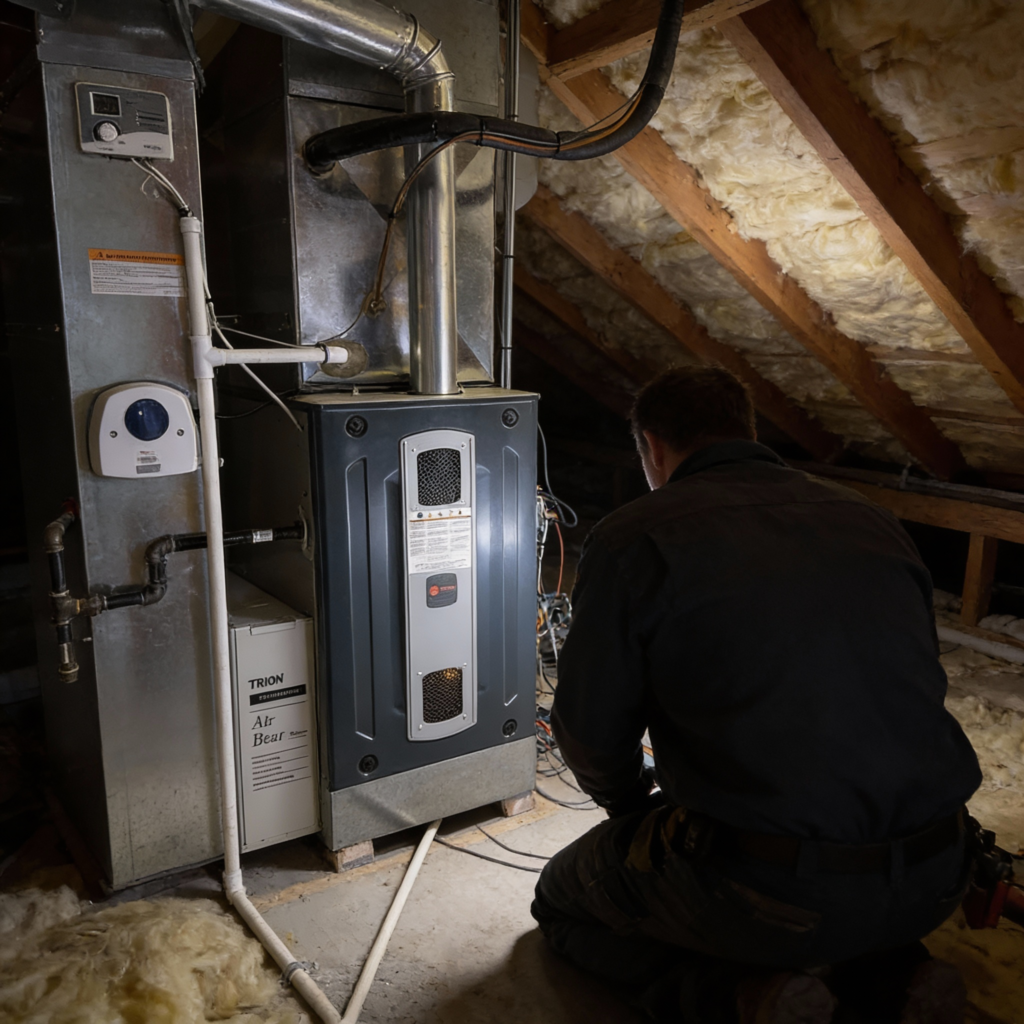
Northeast Ohio doesn’t really have a gentle autumn. One week you’re still running the AC, and the next you wake up to frost on the windshield and a furnace that hasn’t kicked on since April. That gap between “still warm” and “suddenly freezing” is exactly when furnaces that were quietly failing all summer finally give out — usually at night, usually on a weekend, and usually when every other HVAC company in Medina and Summit County is already booked solid.
A fall tune-up is how you avoid being part of that January scramble.
Why Fall Timing Actually Matters
Once temperatures drop hard, HVAC companies everywhere see the same surge in emergency calls, and that means longer waits and higher after-hours rates. Booking a routine tune-up in September or October means you’re getting a technician’s full attention on a normal schedule instead of a rushed emergency slot squeezed in at 9 p.m. It also matters for parts: if your technician finds a capacitor or igniter that’s wearing out, ordering the replacement in October is a non-event. Ordering it in the middle of a cold snap, when every HVAC company in the region is placing the same order, can mean days without heat. And simply put, a scheduled maintenance visit costs a fraction of what an emergency dispatch fee runs — you’re paying for the same inspection either way, just without the panic markup.
What a Professional Fall Tune-Up Actually Covers
Safety and carbon monoxide check. This is the part homeowners underestimate the most. A technician inspects the heat exchanger for hairline cracks that can let carbon monoxide leak into your living space — a risk you can’t see, smell, or diagnose yourself. This single check is worth the appointment on its own.
Flame sensor cleaning. The flame sensor is one of the most common reasons furnaces shut themselves off unexpectedly. It’s a small rod that can accumulate a thin layer of carbon over a season of use, and cleaning it takes minutes but prevents a huge share of “my furnace just stopped working” service calls.
Burner and ignition calibration. Whether your system uses a hot surface igniter or a pilot light, a technician tests it and checks gas pressure to make sure combustion is complete and efficient. Incomplete combustion wastes fuel and can produce more carbon monoxide than a properly calibrated system.
Key Takeaways
- Northeast Ohio experiences sudden temperature drops, making a fall HVAC tune-up essential to avoid emergency breakdowns.
- Scheduling a routine tune-up in September or October ensures better technician availability and quicker parts replacement.
- A professional fall HVAC tune-up covers safety checks, flame sensor cleaning, burner calibration, electrical component checks, vent inspections, and airflow optimization.
- Homeowners should perform basic maintenance like filter changes and keeping vents clear between professional visits.
- Ignoring signs like short cycling or a yellow flame could mean your furnace needs more than just a tune-up; discuss concerns with a technician.
Electrical component check. Loose wiring connections, a weakening capacitor, or a blower motor pulling more amps than it should are all things that don’t announce themselves until they fail completely. Catching them in the fall means a planned repair instead of a no-heat emergency.
Exhaust and vent inspection. Flue pipes and intake lines need to be clear of animal nests, debris, or blockages built up over a summer of disuse — a blocked vent isn’t just an efficiency problem, it’s a safety one.
Airflow optimization. This covers the fan belt, a deep interior cleaning of the cabinet (not just a surface wipe), and a fresh filter. Restricted airflow is one of the leading causes of furnaces overheating and shutting down early in the season.
What You Can Do Yourself Between Visits
You don’t need a license to keep up with the basics. Swap your filter every one to three months depending on your household (more often with pets). Keep a three-foot clearance around the furnace cabinet — no stored boxes, holiday decorations, or paint cans nearby. Walk your home and make sure indoor vents and outdoor exhaust points aren’t blocked by furniture, rugs, or fallen leaves. And while you’re at it, put fresh batteries in every smoke detector and carbon monoxide detector in the house — fall is a natural reminder point for both.
Signs Your Furnace Needs More Than a Tune-Up
Some issues surface during a routine visit that go beyond standard maintenance: short cycling (turning on and off repeatedly), a burner flame that’s yellow instead of blue, a noticeable jump in your heating bill from last winter, or a unit that’s already 15+ years old. None of these mean you automatically need a replacement, but they’re worth a real conversation with your technician rather than waiting to see what happens.
What Does a Fall Tune-Up Cost?
Pricing depends on your system’s age, type, and what (if anything) needs addressing beyond the standard inspection. The more useful way to think about it: a routine tune-up costs a fraction of an emergency after-hours repair, and it’s the kind of expense that prevents a much larger one. If you want an exact number for your specific system, that’s a quick phone call rather than a guess from a blog post.
Why This Matters More in Northeast Ohio Specifically
Lake-effect weather swings here don’t give much warning. A 60-degree afternoon can turn into a hard freeze overnight, and that kind of sudden demand is precisely when a marginal furnace fails. Homeowners in Wadsworth, Medina, and the greater Summit County area aren’t dealing with a gradual seasonal ramp-up — they’re dealing with a light switch.
FAQ
What are the benefits of a fall furnace tune-up? Lower risk of a mid-winter breakdown, better energy efficiency, early detection of safety issues like heat exchanger cracks, and lower overall cost compared to emergency repairs.
How often should a furnace be serviced? Once a year, ideally in early-to-mid fall before the first sustained cold stretch.
Can I do a furnace tune-up myself? You can handle basic tasks like filter changes and clearing debris, but the safety-critical checks — heat exchanger inspection, gas pressure, electrical load — require a licensed technician with the right tools.
What’s included in a typical professional tune-up? Safety/carbon monoxide inspection, flame sensor cleaning, ignition calibration, electrical checks, vent inspection, and airflow optimization.
Book your fall tune-up before the first cold snap hits. Schedule with Dee’s Heating and Cooling today. (330) 554-7015