


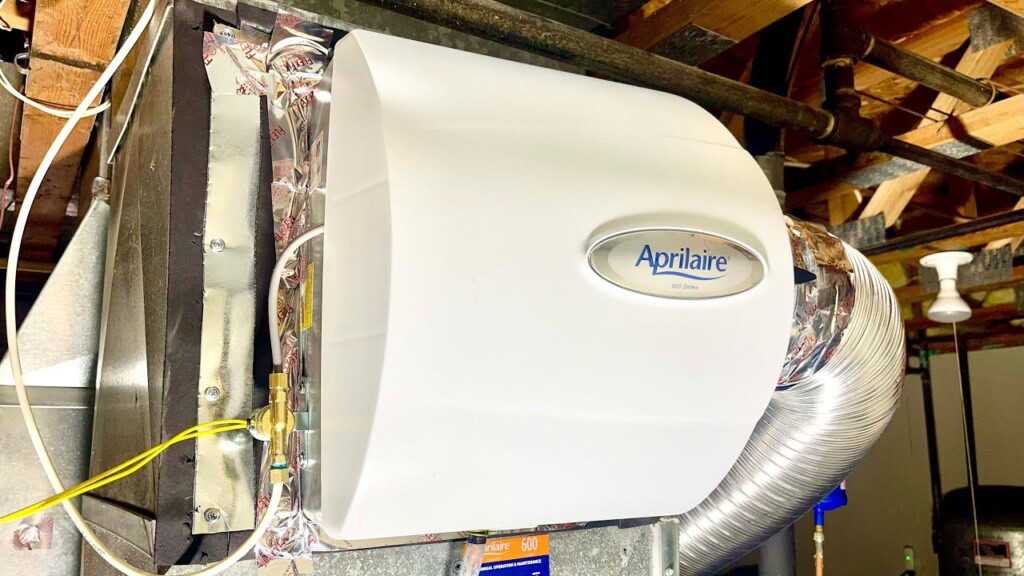
If your skin, sinuses, and houseplants all seem to suffer the moment the furnace starts running for the season, this isn’t a coincidence — it’s a humidity problem, and it’s one of the most common side effects of Northeast Ohio winters that homeowners don’t realize has a fix built right into their HVAC system.
Why Winter Air Gets So Dry Indoors
Cold outdoor air holds very little moisture to begin with, and once your furnace heats that air, the relative humidity inside your home drops even further. The result is air that can sit well below the comfortable range even though it felt fine outside a few hours earlier. This is a forced-air heating issue specifically — it’s not your imagination, and it’s not something that fixes itself as winter goes on.
The Signs You’re Actually Dealing With Low Humidity
Static shocks every time you touch a doorknob, dry skin and cracked lips that don’t improve with lotion, wood floors or furniture joints that seem to shrink or creak more in winter, and static that makes hair impossible to manage are all classic signs. So is a home that feels colder than the thermostat reading suggests — dry air feels cooler than humid air at the same temperature, which sometimes leads people to crank the heat higher than they actually need to.
The Target Range, and Why It’s a Range
Indoor relative humidity between 35% and 50% is the generally recommended target. Below that range, you get the static and dryness described above; above it, you risk condensation on windows and, over time, mold growth — which is its own indoor air quality problem. The goal isn’t maximum humidity, it’s landing in that middle band consistently.
Whole-House vs. Portable Humidifiers
A portable humidifier treats one room and needs to be refilled manually, which means it’s easy to forget and inconsistent by nature. A whole-house humidifier installs into your existing HVAC system and treats the air across your entire home automatically, tied to your system’s operation rather than a tank you remember (or forget) to refill. For a single bedroom, portable can be a reasonable stopgap. For a whole-home dryness problem — which is what’s happening if it’s not just one room — a whole-house unit solves it without the daily maintenance.
How It Ties Into Indoor Air Quality Generally
Humidity control isn’t a separate topic from indoor air quality — it’s one of the four main levers, alongside ventilation, filtration, and source reduction. A home that’s properly humidified also does a better job resisting the dust and static that make filtration work harder, which is why we usually discuss this alongside filtration rather than as a totally separate system.
Is It Worth It for Your Home?
If you’re dealing with static shocks, dry skin, or wood damage every winter and you’re currently relying on portable units scattered around the house, a whole-house system solves the actual problem instead of managing symptoms room by room. If it’s a minor, single-room issue, a portable unit might genuinely be enough — this isn’t a case where bigger is always better, just where consistency matters more than most people expect.
FAQ
Do I need a whole-house humidifier in Ohio? If you experience static, dry skin, or cracking woodwork consistently through winter across multiple rooms, yes — it’s a common side effect of forced-air heating in this climate.
What humidity level should my house be at in winter? Between 35% and 50% relative humidity is the generally recommended range.
Is a whole-house humidifier better than portable ones? For whole-home dryness, yes, because it treats the entire house automatically rather than needing manual refills room by room.
Can too much humidity be a problem too? Yes — above roughly 50%, you risk window condensation and mold growth, which is why the target is a range, not a maximum.
Ask about adding a whole-house humidifier to your system during your next fall furnace tune-up.