

To keep pipes from freezing, disconnect garden hoses, shut off and drain outdoor spigots, insulate pipes in unheated spaces, and keep your home at 55°F or warmer, even when you’re away. Test your sump pump before fall rains, and call a plumber right away if water stops flowing on a cold morning, because a frozen pipe can burst once it thaws.
Most people think about their furnace when the weather turns. Your plumbing needs attention too, and a burst pipe can do more damage in an hour than a broken furnace does in a week. Here’s the fall plumbing checklist our team uses in Wadsworth, Medina and across Summit County.
Which pipes freeze first?
Pipes on outside walls, in crawl spaces, garages, unheated basements, and under kitchen or bathroom sinks on exterior walls. Outdoor spigots are the most common problem, especially when a hose is left attached.
Your fall plumbing checklist
- Disconnect every garden hose. Water trapped in the hose freezes back into the faucet.
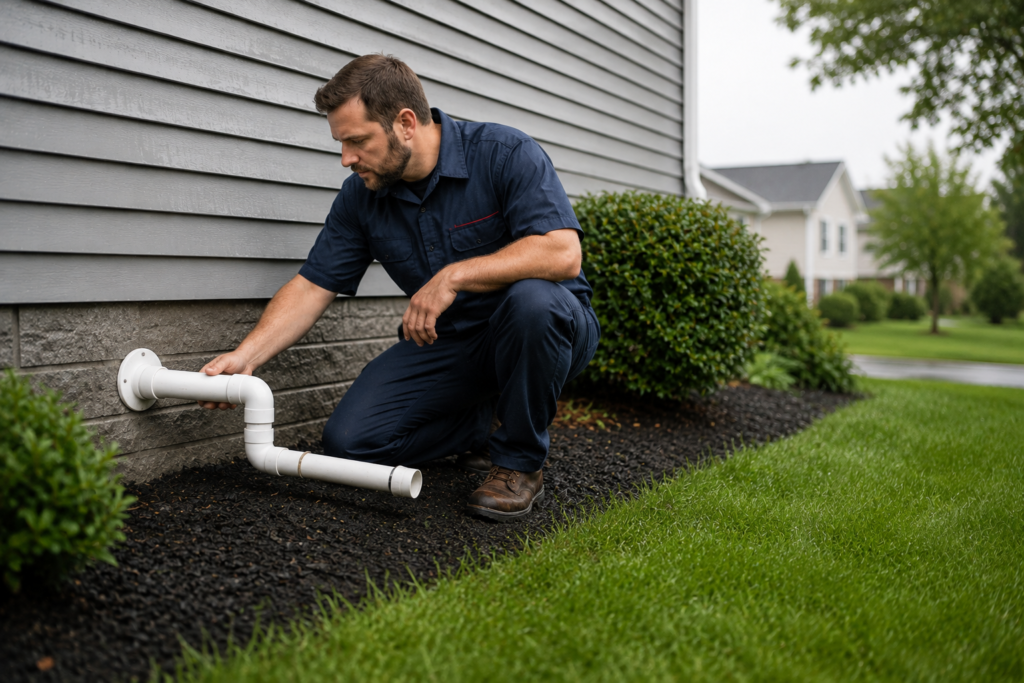
- Shut off and drain outdoor spigots. Close the inside shut-off valve, then open the outside faucet to let it drain.
- Insulate exposed pipes with foam sleeves from any hardware store, especially in the garage and crawl space.
- Seal drafts around pipes where they enter the house.
- Test your sump pump. Pour a bucket of water into the pit and make sure the pump kicks on and drains it. Fall rain and winter snowmelt are when a failed pump floods a basement.
- Know where your main water shut-off is. If a pipe bursts, turning it off fast limits the damage.
What should I do if my pipes freeze?
If you turn on a faucet and get a trickle or nothing on a cold morning, a pipe is likely frozen.
- Leave the faucet open so water can flow as it thaws.
- Warm the area gently with a hair dryer or space heater, never an open flame.
- Check for bulges or cracks. A frozen pipe often bursts when it thaws, not while it’s frozen.
- If you can’t find the frozen section, or you see water, shut off the main and call a plumber.
Does my furnace affect my pipes?
Yes, and it’s the part most people miss. If the furnace quits overnight in January, pipes in outside walls can freeze within a few hours. Keeping the heat at 55°F or higher and getting a fall furnace check-up protects your plumbing too. See our furnace first-start checklist for what to check.
What about my water heater?
Winter makes your water heater work harder, because incoming water is much colder. If your hot water runs out faster in winter, that’s often sediment in the tank. More on that in why your water heater works harder in winter.
Not sure where to start? Just call.
If you’d rather have someone look it over, our licensed plumbers can check exposed pipes, spigots, your sump pump and your main shut-off in one visit. Call (330) 554-7015 and tell us what’s going on. We’ll let you know if it can wait or needs a tech today.
Veterans: ask about our $0 service fee with a paid plumbing repair (through October 29, 2026). See our coupons page for current offers.
Frequently asked questions
What temperature do pipes freeze at?
Pipes in unheated spaces can start to freeze when it’s 20°F or colder outside, especially overnight and on windy days.
Should I drip my faucets in winter?
On the coldest nights, a slow drip on faucets along outside walls can help keep water moving.
How often should I test my sump pump?
At least twice a year, before spring and before fall rains, and after any power outage.
Related reading: Furnace not working after summer? What to check first · Why your water heater works harder in winter · Repair or replace your furnace this winter?